01 · Confirm the event, not just the season
A matsuri is a festival, but the word does not describe one standard programme. Some events centre on shrine rituals or processions; others have different community or seasonal purposes. Food stalls may be an important feature, a small addition or absent altogether. A photograph from a previous year does not establish what will be operating during your visit.
Check the organiser’s current information for dates, access arrangements, stall areas and any changes caused by weather or crowd management. Kyoto’s Gion Matsuri, Osaka’s Tenjin Matsuri and Tokyo’s Sanja Matsuri are distinct events with their own histories and programmes. Do not assume that a famous festival name means food is available everywhere, throughout every associated activity.
02 · Read the temporary menu
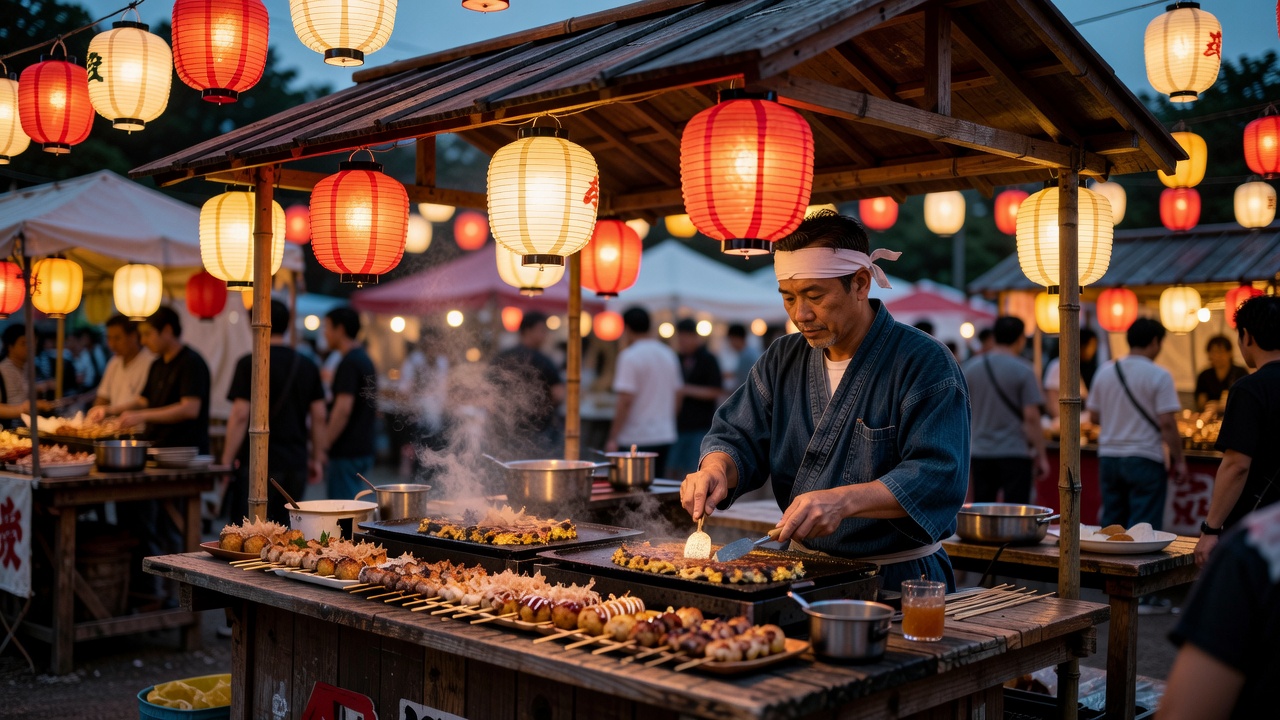
Festival stalls often favour food that can be prepared efficiently and handed over in a tray, cup or on a stick. Yakisoba, takoyaki, grilled corn and skewers are familiar possibilities. Sweet options may include chocolate-coated bananas, candied fruit or kakigori, a shaved-ice dessert. The actual selection depends on the event, operator and season.
Portable does not mean simple in dietary terms. Grilled corn may be brushed with a soy-based sauce, batter may contain egg or fish stock, and a colourful sweet may include dairy or other ingredients that are not apparent from the display. Ask about the finished dish before ordering. A crowded temporary counter can have limited capacity to answer detailed questions, so be ready to choose another option if necessary.
03 · Pick one hot dish, then reassess
A useful first choice is something you can eat comfortably in the available space. A tray of noodles needs a steadier position than a single skewer; shaved ice can melt while you search for a place to stop. Before paying, identify where you will actually eat and whether you need both hands to manage the portion.
Let the first dish establish your appetite. A festival is not a requirement to sample every stall. Rich sauces, sweet drinks and large portions can add up quickly, especially when several people buy without coordinating. If you are sharing, check whether utensils are available and keep the exchange clear at the counter rather than reorganising everyone’s bags in the collection area.
First: find the permitted eating and disposal areas.
Then: choose one dish that suits the space.
Next: watch part of the event before deciding whether you want more.
04 · Plan for heat, rain and hands full of food
Hot weather can make standing in a dense queue uncomfortable. Carry water, take breaks and avoid building the whole outing around continuous eating. Shaved ice is a dessert, not a substitute for adequate hydration. If anyone in your group begins to feel unwell, stop the food trail and seek appropriate assistance rather than trying to complete the route.
Rain introduces a different problem: umbrellas, trays and narrow lanes compete for space. Follow event guidance, keep cooking areas clear and choose shelter that does not obstruct a doorway. Temporary stalls may reduce service or close when conditions require it. Have a nearby alternative for a proper meal rather than depending on one photographically appealing stall.
05 · Keep the celebration at the centre
Food queues should not spill into procession routes or block access to shrines, homes and working businesses. Follow stewards’ directions promptly, even if that means leaving a convenient viewing position. Do not step into a restricted area to photograph a grill, lantern or performance. Ask before taking close photographs of vendors and respect signs that limit photography.
Where alcohol is sold, do not assume every public space permits drinking or that every event uses the same rules. The legal drinking age in Japan is 20. Keep alcohol away from anyone under that age and plan transport responsibly. A lively atmosphere does not remove the need to respect neighbours and other visitors.
06 · Sort waste before moving on
Temporary events may use staffed waste stations, separate containers or vendor-specific return points. Check the signs rather than dropping an entire tray of mixed items into the first opening you see. Wooden skewers can be sharp; put them only where indicated. Never leave a used tray on a wall or tuck a wrapper beneath a stall counter.
Before leaving, check your group’s belongings and agree on a meeting point if the crowd separates you. A satisfying outing might include only one savoury dish and one sweet, with plenty of time spent watching the event. The food is part of the celebration, not a reason to rush through it.
Use Japan National Tourism Organization for broad festival context and Kyoto’s official travel guide for local planning. Follow links from official destination information to the relevant organiser for current arrangements. Our guides do not publish live event schedules or promise that particular stalls will attend.