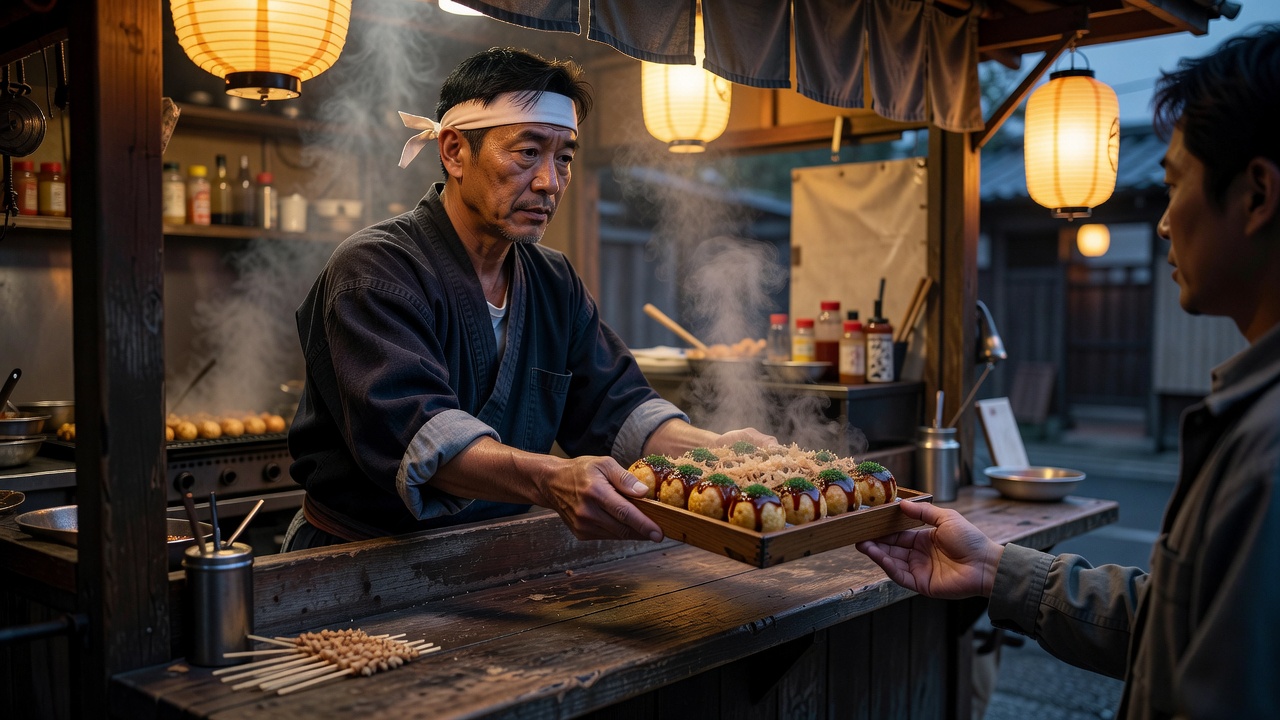
01 · Pause before joining
Look for menu boards, queue markers and separate collection points. People gathered around a stall may already have paid. If the line is unclear, ask rather than stepping into the most convenient gap. Keep companions together without spreading across an entrance or neighbouring shopfront. In a narrow market, a small sideways step can make a meaningful difference to the people passing through.
Use the waiting time to decide. Check the portion size, whether a price applies to one piece or a set, and whether variations are listed separately. If you cannot tell where the menu starts, point to the item you are considering and confirm the order with the vendor. You do not need perfect Japanese to make a careful, unhurried choice.
02 · Ask about ingredients before ordering
Make dietary requirements clear before money changes hands or food reaches the grill. A dish can contain fish stock, meat extract, wheat, egg or dairy without those ingredients being visible. Removing a garnish may not solve the underlying issue. Shared griddles, utensils and oil also matter for people who need to avoid cross-contact.
For a serious allergy, carry a reliable Japanese-language explanation and give the vendor time to read it. Ask whether the complete dish and preparation method can be checked. If the answer is uncertain, choose another option rather than treating a polite nod as a safety guarantee. This website cannot certify any vendor or substitute for professional allergy advice.
03 · Make the order specific
State the item, quantity and available variation together where possible. Pointing at a printed menu or display can help, especially in a noisy setting. “Kore o hitotsu, kudasai” means “One of this, please” when the item is clear from your gesture. Listen for a confirmation and check that the quantity is understood before payment.
Do not assume the stall can make extensive substitutions. Ingredients may already be mixed or portions prepared in advance. A short menu can reflect a deliberately efficient cooking process rather than a lack of willingness to help. If a requested change is not possible, accept the answer and choose something suitable elsewhere.
04 · Follow the payment system
Some stalls take payment first; others collect it when the food is ready or after a seated meal. Watch a complete transaction and follow the vendor’s instruction. Cash remains useful, but acceptance varies. Check payment signs instead of assuming a card, transport card or phone wallet will work at every counter.
Where a payment tray is provided, use it. Have your money ready without placing personal belongings on a food-preparation surface. Keep any ticket or order number, and step aside once the transaction is complete. Tipping is not generally expected in ordinary Japanese food-stall transactions; paying the stated amount and offering a simple thank-you is appropriate.
05 · Wait where your order can find you
A fresh batch may take longer than the order in front of you. Stay near the collection point without blocking it, and avoid leaning into the cooking area to check progress. If you receive a number, listen for it and keep the ticket accessible. Before leaving the counter, check that you have the complete order and any utensils the vendor supplies.
Ask permission before taking close-up photographs of staff or their workspace. A busy cook may not be able to pose or repeat a preparation step. Keep cameras and phones away from hot surfaces and other customers’ meals. If photography is prohibited, enjoy watching without recording.
06 · Eat in the right place
There is no single rule covering every street in Japan, but eating while moving through a crowded shopping lane can cause spills and obstruct others. A considerate default is to stop in a designated or permitted space. Some shops specifically ask customers to eat at their premises. Follow those instructions rather than copying another visitor who happens to be walking away with food.
At a seated stall, order according to the house rules and make room when you finish, particularly if others are waiting. Do not use a neighbouring business’s steps or tables without permission. Let freshly cooked food cool, especially filled cakes and takoyaki, which can hold heat well beyond what their exterior suggests.
07 · Finish with the wrapper
Use the stall’s designated disposal point if one is provided, and follow any sorting signs. Skewers may have a separate container because their sharp ends are a handling hazard. Do not leave trays on a counter unless it is clearly a return point, and do not put food waste into another business’s bins without permission.
If no suitable bin is available, carry your waste until you find an appropriate place. A small spare bag is useful for wrappers, though sharp skewers need careful handling. Finish with “arigatou gozaimasu”—thank you—and move clear of the queue before deciding on the next stop. The best closing gesture is leaving the space easy for the next person to use.