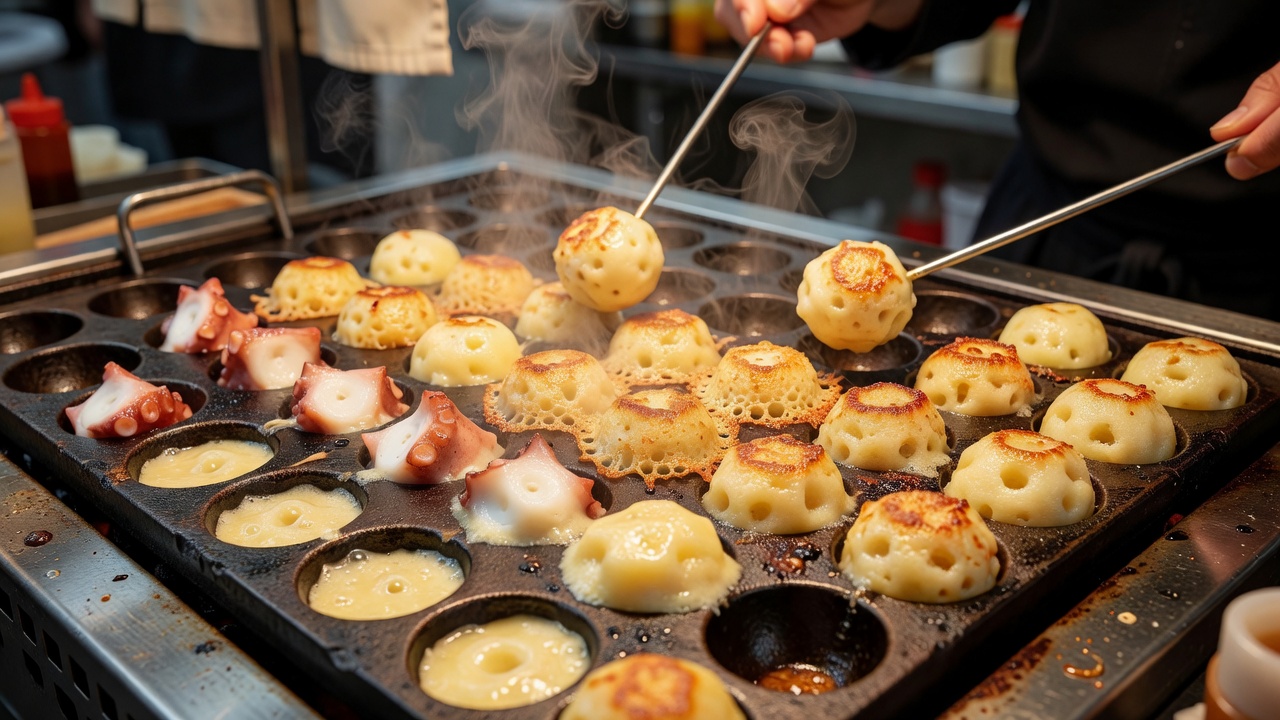
01 · Decide what kind of bite you want
If you want a snack, start with a small tray or a single skewer. If you want lunch, a substantial okonomiyaki or portion of yakisoba may suit you better. Menus do not always use the same serving sizes, so look at a finished order before deciding. Sharing can help you taste more, provided the vendor’s seating and minimum-order arrangements allow it.
Cooking equipment gives useful clues. Round wells suggest takoyaki, a broad iron plate may be handling noodles or pancakes, and a grill may hold several different cuts of meat. These clues are an invitation to ask, not a substitute for checking the menu. Similar-looking foods can have very different fillings and seasonings.
02 · Takoyaki: look past the round shape
Takoyaki is strongly associated with Osaka. Pieces of octopus sit inside a wheat-based batter, which cooks in hemispherical wells and is turned to form balls. Spring onion, pickled ginger and other additions vary. The centre is often soft rather than bread-like, so a gently yielding texture is not necessarily a cooking mistake.
Common finishing touches include a savoury-sweet sauce, mayonnaise, aonori and dried bonito flakes. Some vendors offer salt, broth or other variations. Let the food cool before taking a full bite: steam can be trapped inside. If you avoid seafood, this is not simply a dish where you can remove the visible octopus; stock and toppings may also contain fish.
Expect: a soft interior and a hot centre.
Ask about: portion count, toppings and stock.
Do not assume: every vendor uses the same sauce or batter.
03 · Okonomiyaki and yakisoba: griddle meals
Okonomiyaki is a savoury griddled dish commonly built around flour batter and cabbage, with other ingredients depending on the style and shop. An Osaka-style version generally mixes cabbage into the batter before cooking. Hiroshima-style versions commonly build ingredients in layers and include noodles. Neither label tells you every ingredient in the finished plate.
Yakisoba consists of stir-fried wheat noodles, usually cooked with vegetables and often pork, then seasoned with a savoury sauce. Despite the word “soba,” these are not normally the buckwheat noodles many visitors associate with that name. The exact noodle composition still needs checking if you have an allergy. A vegetable-looking serving may have cooked on the same surface as meat or contain animal-derived sauce.
Watch how the vendor manages orders. A griddle batch may serve several customers, and your food might not be handed over immediately after payment. Stay within calling distance without leaning over the cooking area. If the stall offers a ticket or number, keep it until your order is complete.
04 · Skewers: identify the ingredient first
Yakitori refers to grilled chicken skewers, but the menu may include thigh, skin, liver or other parts—not just breast meat. A wider skewer menu can also include vegetables and non-chicken ingredients. Check the individual name or ask the vendor to identify it. Choosing by shape alone is unreliable once a glaze has covered the surface.
Two common seasoning choices are shio, meaning salt, and tare, a sauce whose recipe varies. Tare often contains soy sauce and may include other ingredients relevant to dietary restrictions. Salt seasoning is not a guarantee that a dish is free from allergens or cross-contact. Handle the skewer carefully and use the disposal container supplied rather than pushing sharp sticks into an ordinary bag.
05 · Make the sweet stop a separate choice
Taiyaki is a fish-shaped cake, traditionally associated with sweet red-bean filling, though custard and other fillings are common. The shape does not mean it contains fish, but the batter may contain egg, milk or wheat. Ask about the actual recipe. Imagawayaki is another filled griddle cake, usually round, with names that vary by region.
Dango offers a different texture: these dumplings are typically made with rice flour and served on skewers. Mitarashi dango commonly carries a glossy sweet-savoury soy-based glaze. Rice-based does not automatically mean gluten-free, because sauces may contain wheat. For any serious allergy, use a clearly written explanation in Japanese and accept that a small stall may be unable to verify safe preparation.
06 · Let the second stop answer a new question
After a soft, sauced dish, you might prefer a simply seasoned skewer rather than another rich tray. After a full noodle portion, a shared sweet may be enough. There is no required sequence and no prize for trying everything. The useful habit is to notice what you enjoyed: crisp edges, smoky grilling, springy noodles or a particular topping. That observation makes the next unfamiliar menu easier to navigate.
For the places behind these dishes, continue to the regional guide. For practical payment and disposal questions, use the ordering trail.