01 · Use regional identity as a starting point
Food traditions help explain a city, but they do not divide Japan into fixed menu zones. Takoyaki is available far beyond Osaka, and Hiroshima-style okonomiyaki can be found outside Hiroshima. Regional associations are most useful when they encourage you to notice preparation, history and local preference—not when they become a claim that only one place can cook a dish correctly.
Also distinguish a food district from a street market. Many celebrated eating areas are made up of permanent restaurants, covered shopping arcades and takeaway counters. You may spend much of the visit indoors or standing in a shop’s designated space. Plan around the kind of meal you want rather than expecting every famous district to be lined with outdoor carts.
02 · Osaka: start with the griddle
Osaka is closely associated with konamon, a broad term for flour-based foods. Takoyaki and okonomiyaki are obvious introductions, but the useful comparison is between individual preparations. One takoyaki vendor may emphasise a very soft centre; another may produce a firmer exterior. A topping combination can change the balance from rich and sweet-savoury to comparatively light.
Dotonbori is a well-known food and entertainment district, while Kuromon Ichiba Market offers another setting for food browsing. Neither name guarantees a particular price, queue length or eating arrangement. At busy counters, check where customers are meant to stand and whether the shop permits eating immediately outside. A famous sign is a landmark, not a promise that every nearby meal will suit your preferences.
03 · Hiroshima: watch the layers
Hiroshima-style okonomiyaki commonly starts with a thin batter base, followed by ingredients such as cabbage, pork, noodles and egg. The cook’s control of sequence, heat and turning helps hold the components together. Noodles make many versions substantial, so think of this as a potential meal rather than automatically adding it to a long snack itinerary.
Okonomimura is a recognised destination with multiple okonomiyaki establishments. It is a useful example of how a regional food experience may involve indoor counters rather than a temporary stall. Look at each establishment’s menu and seating instructions. If you are choosing between noodle types or toppings, ask before cooking begins rather than requesting changes as the finished dish arrives.
04 · Fukuoka: leave room for the yatai experience
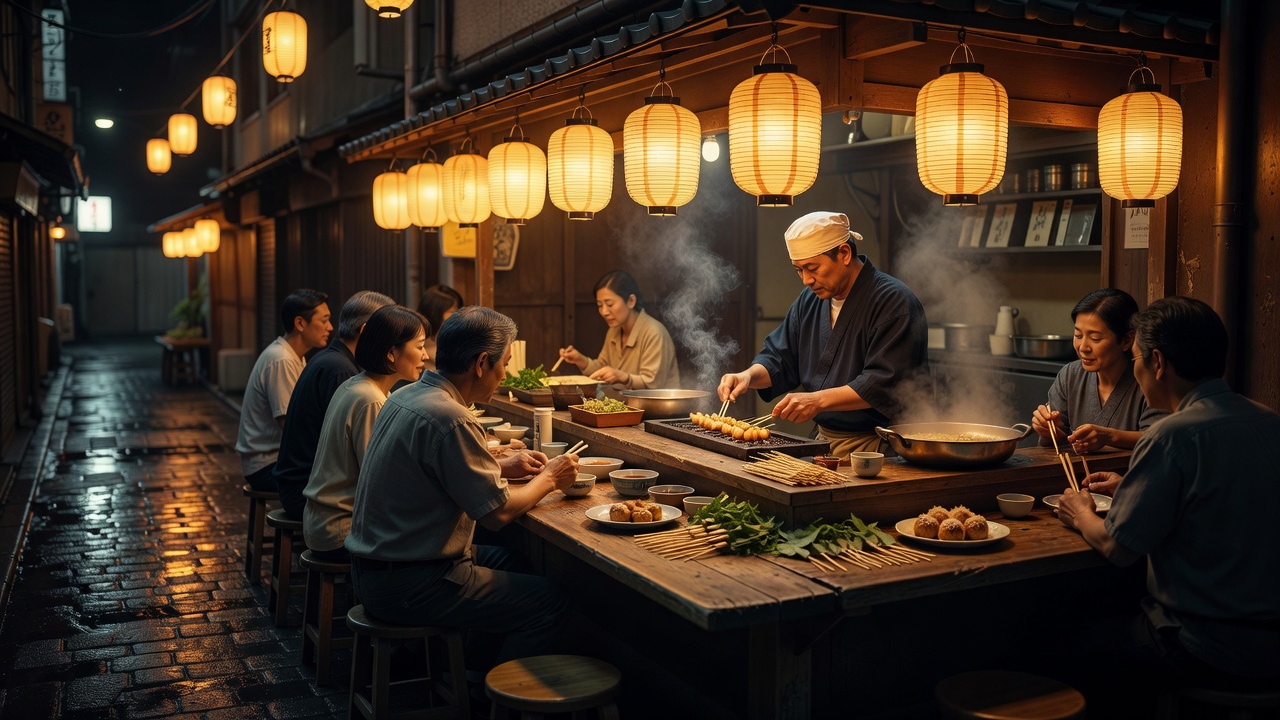
Fukuoka’s yatai are small food stalls, often with compact counter seating. Areas associated with them include Tenjin and Nakasu. Menus vary: ramen, oden and grilled dishes may appear, but no single dish defines every stall. The attraction includes proximity to the cook and other diners, which also means that space is limited.
Read the posted menu and any house rules before sitting down. Ask whether seats are available rather than filling an apparent gap that may belong to someone waiting. If you occupy a seat, expect to order for yourself and avoid treating it as a free rest area. Weather and operating arrangements can affect which stalls open, so consult current official information rather than building an evening around an unverified schedule.
| Setting | Useful expectation | Check locally |
|---|---|---|
| Osaka takeaway counter | A focused snack or freshly cooked tray | Queue and eating location |
| Hiroshima griddle counter | A substantial cooked-to-order meal | Seating and noodle options |
| Fukuoka yatai | A compact seated food experience | Opening status and house rules |
| Festival stall | An event-specific temporary menu | Event access and disposal points |
05 · Kyoto and Tokyo: markets need context
Kyoto’s Nishiki Market is a shopping environment as well as a visitor destination. Pay attention to signs concerning where food should be eaten, and do not assume a busy lane is a suitable dining space. A shop may ask customers to finish purchases at its own premises. That arrangement protects access for shoppers and neighbouring businesses.
Tokyo offers many different food settings, including Asakusa and the Tsukiji Outer Market. These areas have distinct purposes and rhythms; they are not identical all-day snack parks. Asakusa’s approach to Senso-ji is also a place of religious and neighbourhood significance. In Tsukiji, respect working shops and follow individual photography and eating rules. Confirm hours directly because one business’s schedule does not describe the whole district.
06 · Build a route that leaves room to notice
Choose one area, identify a few possibilities and keep an alternative nearby. Allow for a seated meal if the weather turns or queues make snacking awkward. You do not need to travel across a city for every regional association on a list. A well-understood local stop is often more rewarding than a rushed sequence of famous names.
For current destination information, begin with Osaka’s official tourism guide, Explore HIROSHIMA, Fukuoka’s YokaNavi and GO TOKYO. These sources provide destination context; confirm individual menus and access with the relevant business.